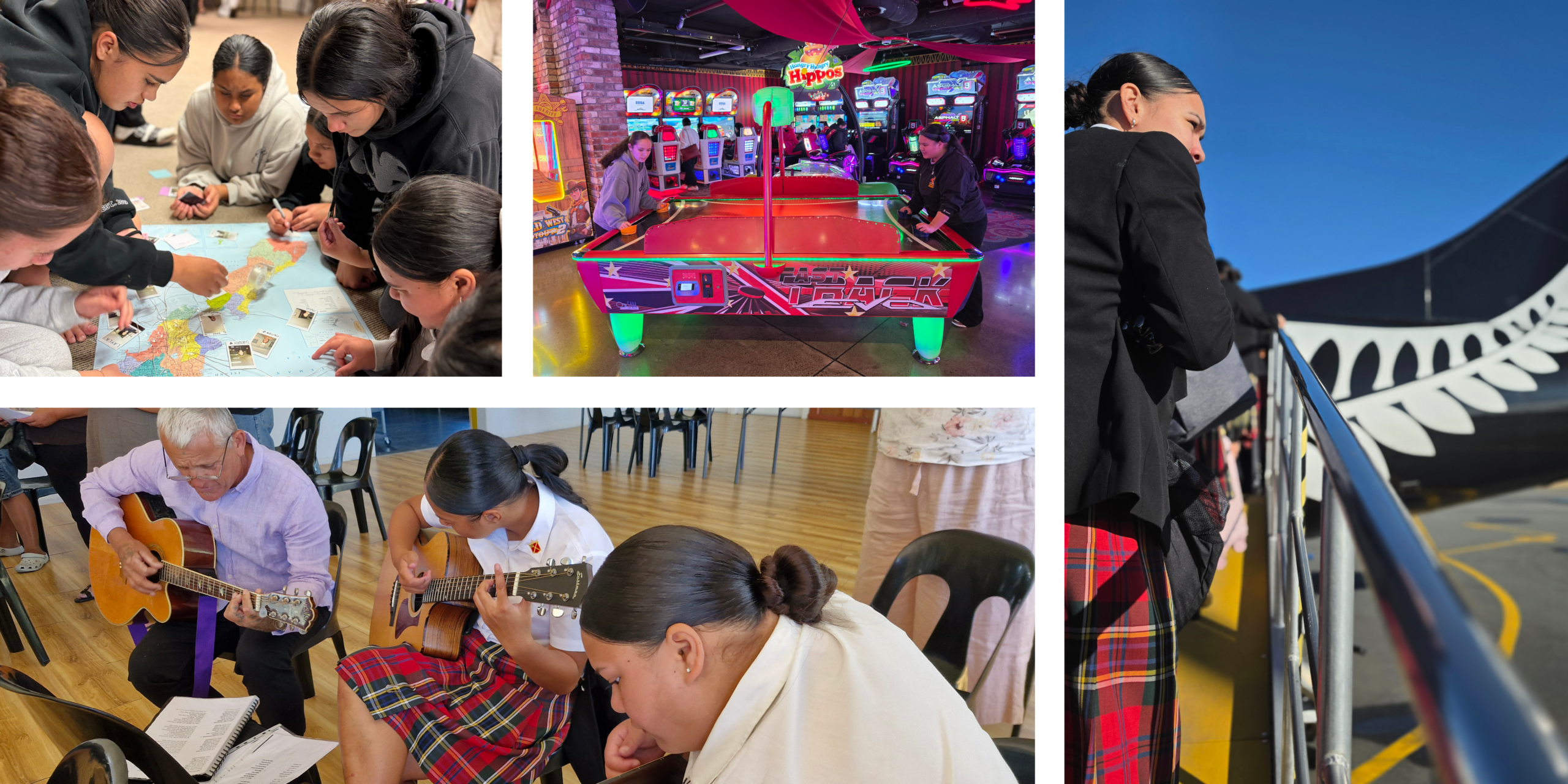
Life at Hukarere Girls College wharenoho is shaped by rhythm, routine and relationship.
Morning Kōhine begin the day with routines that prepare them for kura, including getting ready, shared breakfast, uniform expectations, room responsibilities and morning duties.
After kura After school, kōhine return to the wharenoho, change out of uniform, complete personal routines, connect with whānau during approved device times, attend activities and prepare for the evening.
Dinner and pānui Shared meals are an important part of wharenoho life. They provide time to gather, give pānui, and build whanaungatanga.
Study and prep Evening study supports kōhine to complete homework, prepare for assessments and build strong learning habits.
Wind-down and rest Clear evening routines help the kōhine settle. Year-level expectations support age-appropriate independence, quiet time and rest.
Weekends Weekends balance rest, whānau leave, hostel activities, duties and recreation. All leave is managed through approved processes to keep kōhine safe and accounted for.
Pastoral care, safety and wellbeing
Our wharenoho team is committed to caring for kōhine in a way that is firm, fair, warm and consistent.
Staff support kōhine by:
- Building positive relationships based on trust and respect
- Encouraging spiritual, cultural, emotional and social wellbeing
- Supporting routines around study, meals, duties, sleep and personal care
- Monitoring wellbeing and following up concerns
- Communicating with whānau when needed
- Working with kura staff to support learning, attendance and engagement
- Maintaining clear expectations for behaviour, safety and respect
When kōhine make mistakes, the focus is on reflection, accountability, restoring relationships and returning to the values of the wharenoho.
Study, devices and academic habits
Boarding provides an environment where kōhine can build strong learning routines.
During study time, kōhine are expected to arrive prepared, focus on schoolwork and use devices appropriately for learning. Staff supervise and support study so that boarders can develop independence, self-management and confidence in their mahi.
The wharenoho works closely with kura expectations so that learning, attendance, wellbeing and whānau communication remain connected.
Meals, spaces and facilities
The wharenoho provides a shared living environment where kōhine learn to care for themselves, one another and the whare.
Boarders have access to:
- Shared dining spaces
- Common room areas
- Art room and study room areas
- Study routines and supervised prep
- Laundry facilities
- Recreational spaces
- Kura sporting and cultural opportunities
- Support from hostel staff
- Structured daily routines
Meals are shared together and are part of the culture of the wharenoho. Kōhine are expected to attend meals, show respect, help with rostered duties and contribute positively to the dining environment.
Whānau communication and leave
Whānau partnership is important to the success of every boarder.
Leave is managed through approved hostel processes and must be supported by whānau or approved contacts. Kōhine may only leave the wharenoho when leave has been approved and sign-out expectations have been met.
Whānau are encouraged to keep the wharenoho updated about health matters, travel arrangements, wellbeing concerns and any changes that may affect their daughter’s care.